1. Sample details
2. Sieve set & trial entry
3. Sieve reading (this trial)
Standard fine-aggregate sieve set. Pan is included for the mass-balance check only.| IS Sieve | Wt retained (g) | Cum. wt retained (g) | % retained | Cum. % retained | % passing |
|---|---|---|---|---|---|
| Total | 0.0 | ||||
This trial vs grading zones
green = within limit · amber italic = outside limit but allowed under IS 383 Cl 6.3 tolerance (≤5% per sieve, ≤10% cumulative; not applicable to 600μ or the outer edges of Zone I/IV) · red = fails · highlighted column = zone this result conforms to.
4. Saved gradations — by sand type
Every sand type you've saved stays visible here.5. All-in-aggregate grading
Blends the coarse aggregate (from the Coarse Aggregate Gradation module) with this fine aggregate.Pick which saved coarse-aggregate source represents the coarse fraction, and which fine aggregate to use, then enter each one's proportion of the all-in mix (should add to 100%). Combined % passing is auto-calculated — it is not simply the average of the two.
| Sieve | % Passing coarse agg. | % Passing fine agg. | Combined % passing | IS 383 lower limit | IS 383 upper limit | Mid limit | Status |
|---|
All-in-aggregate grading curve
6. Report
This app saves everything (gradations) for the active project in your browser, tied to this folder. Logos and project details are entered once on the main Projects page and shared by every module. If you move the files to a new folder, saved data won't carry over automatically — export a backup first, then import it after moving.
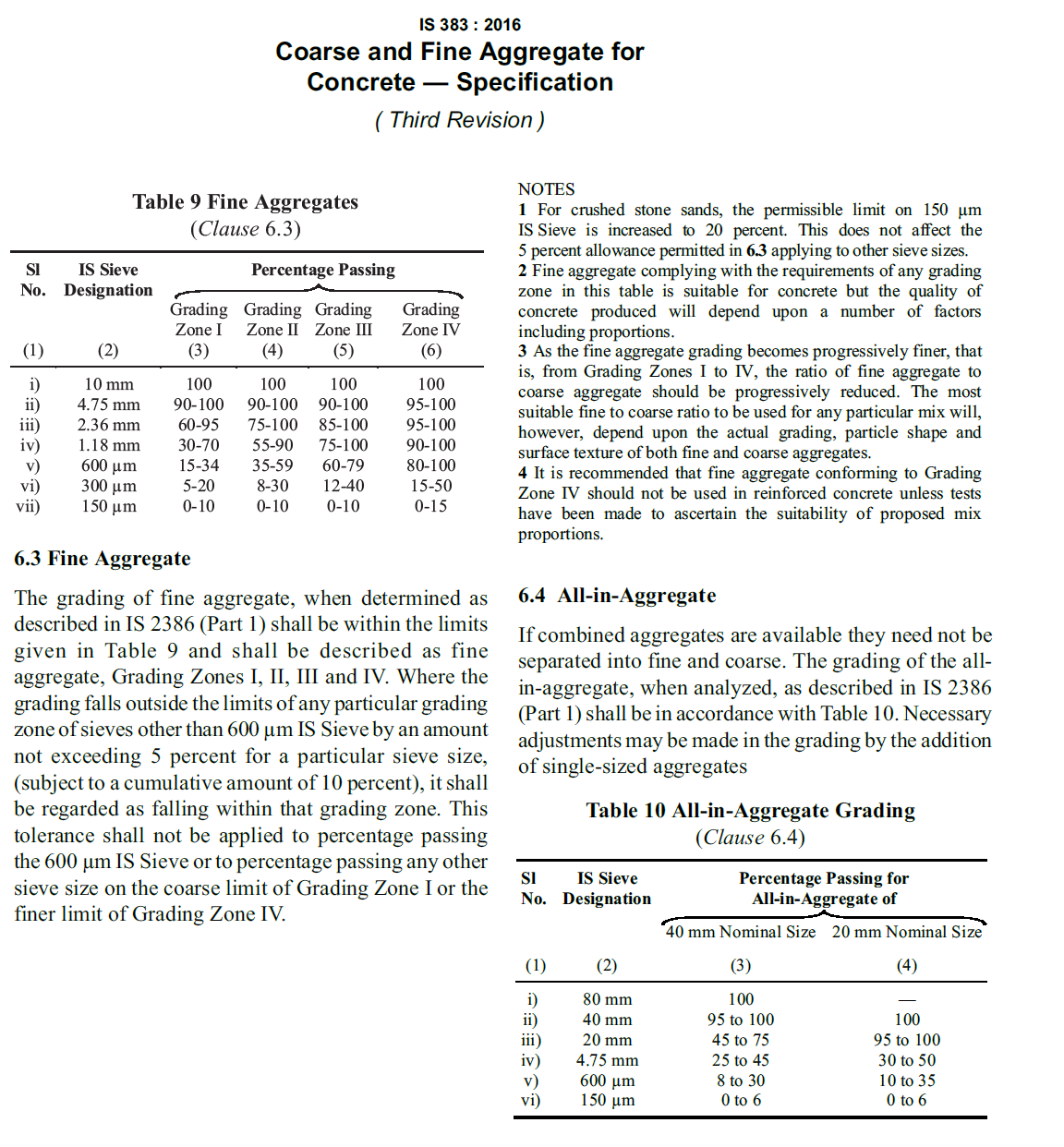
Reference — IS 383:2016, Table 9
Kept here for quick reference while testing. Always verify against your current copy of the standard.
For crushed / manufactured sand, the 150 μ upper limit is relaxed to 20% (all zones) in place of the natural-sand figure shown above.